
Maulana Wahiduddin Khan
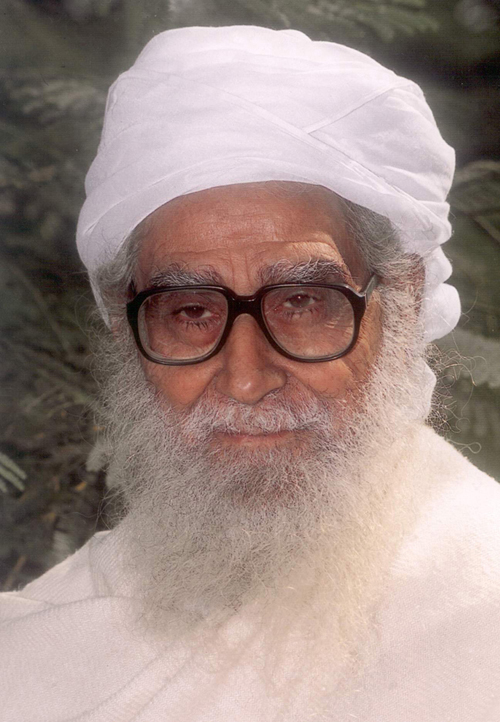
Maulana Wahiduddin Khan
Maulana Wahiduddin Khan was a prominent Indian Islamic scholar, Qur’anic commentator, author, and spiritual teacher whose writings focused on the relationship between Islam, spirituality, peace, and the modern world. Born on 1 January 1925 in Azamgarh, Uttar Pradesh, India, he dedicated much of his life to Islamic scholarship, intellectual development, spiritual reform, and interfaith dialogue. He passed away in New Delhi on 21 April 2021, aged 96.
About Maulana Wahiduddin Khan
Early Life & Education
Wahiduddin Khan was born in Badharia, in the Azamgarh district of present-day Uttar Pradesh. He lost his father when he was four years old and was raised by his mother, Zaibunnisa, and his uncle, Sufi Abdul Hamid Khan.
In 1938, he began his formal religious education at Madrasa-tul-Islah in Sarai Mir, Azamgarh. He completed the traditional ʿālim course in 1944. Alongside his traditional Islamic education, he developed a strong interest in modern knowledge, science, philosophy, and contemporary intellectual thought.
Scholarly & Literary Work
Maulana Wahiduddin Khan was a prolific writer, producing more than 200 books and numerous articles on Islam, spirituality, Qur’anic interpretation, peace, interfaith relations, and contemporary issues.
Among his best-known works is Tazkirul Quran, a detailed commentary on the Qur’an. He also produced a contemporary English translation of the Qur’an, making Qur’anic teachings accessible to a wider international readership.
His writings include works such as:
- Tazkirul Quran
- God Arises
- The Prophet of Peace
- The Ideology of Peace
- The Prophet of Revolution
- Invitation to Islam
- Islam and the Modern Age
- The Book of Knowledge
His intellectual work frequently addressed how Islamic teachings could be understood and communicated in the context of the modern world.
Peace & Interfaith Dialogue
A major theme of Maulana Wahiduddin Khan’s work was the promotion of peace, nonviolence, spiritual development, and dialogue between religious communities.
He established the Islamic Centre in New Delhi in 1970 and later founded the Centre for Peace and Spirituality (CPS International) in 2001. The organization was established with a focus on peace, spirituality, and interfaith dialogue.
Following the demolition of the Babri Masjid in 1992, Khan participated in a peace march across Maharashtra with Jain monk Acharya Muni Sushil Kumar and Swami Chidanand Saraswati, seeking to promote communal harmony.
Approach to Islam
Khan’s writings presented Islam primarily through themes of peace, spirituality, intellectual reflection, and personal transformation. He emphasized the importance of tawhid (the oneness of God), dawah (inviting people toward faith), education, and constructive engagement with society.
He also wrote extensively about Islam’s relationship with science, modern thought, education, and contemporary society. His approach sought to communicate Islamic teachings through reasoned discussion and a modern intellectual framework.
Institutions & Initiatives
Throughout his life, Khan established and supported several initiatives devoted to Islamic learning and peace, including:
Islamic Centre, New Delhi — established in 1970.
Centre for Peace and Spirituality International — founded in 2001 to promote peace, spirituality, and interfaith dialogue.
Quran Foundation — founded in 2015 under the CPS International umbrella to help disseminate Qur’anic translations and Islamic literature internationally.
Awards & Recognition
Maulana Wahiduddin Khan received several national and international recognitions for his contributions to scholarship, peace, and social harmony.
Among them were:
- Padma Bhushan — 2000
- Rajiv Gandhi National Sadbhavana Award — 2009
- Demiurgus Peace International Award
- National Citizens’ Award
- Padma Vibhushan — 2021
The Padma Vibhushan, awarded in 2021, is India’s second-highest civilian honour.
Legacy
Maulana Wahiduddin Khan left behind an extensive body of Islamic literature covering Qur’anic interpretation, spirituality, peace, ethics, interfaith relations, and the challenges of modern life.
Through his books, lectures, institutions, and translations, he sought to present Islamic teachings to contemporary audiences and encourage peaceful engagement between people of different religious and cultural backgrounds.
His writings continue to be read by students, researchers, spiritual seekers, and readers interested in Islam and contemporary religious thought.
Born: 1 January 1925, Azamgarh, India
Died: 21 April 2021, New Delhi, India
Field: Islamic scholarship, Qur’anic studies, spirituality, peace and interfaith dialogue
Notable Work: Tazkirul Quran
Languages: Urdu, English, Hindi, Punjabi
Known For: Islamic scholarship, writing, Qur’anic commentary, peace advocacy, and interfaith dialogue