
Imam al-Ghazali
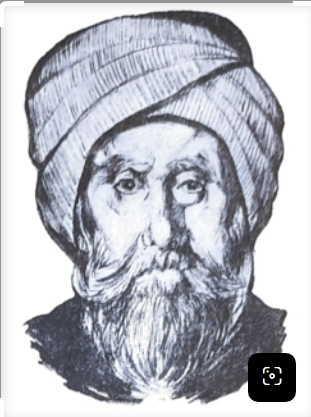
Imam al-Ghazali
Abu Hamid Muhammad ibn Muhammad al-Ghazali c. 1058–1111 CE / 450–505 AH Imam Abu Hamid al-Ghazali was one of the most influential scholars in the intellectual history of Islam. He is remembered for his contributions to Islamic jurisprudence, theology, philosophy, ethics, and spiritual thought. His writings brought together rigorous intellectual inquiry with a strong emphasis on religious practice, moral character, and the inner life of the believer. He was associated with the Shafi'i school of jurisprudence and became particularly influential through works such as Ihya' 'Ulum al-Din, Tahafut al-Falasifa, and al-Mustasfa. His intellectual legacy influenced Muslim scholars for centuries and also attracted considerable attention in Jewish and Christian intellectual traditions.
About Imam al-Ghazali
Early Life
Al-Ghazali was born in the region of Tus in Khurasan, in northeastern Iran, around 1058 CE. He and his younger brother Ahmad grew up after the death of their father and received an early education in their hometown.
He later traveled in pursuit of advanced Islamic learning. His studies included jurisprudence and other Islamic sciences, eventually bringing him to Nishapur, where he studied under the distinguished theologian and jurist Imam al-Haramayn al-Juwayni.
During this period he developed a strong foundation in Shafi’i jurisprudence and Ash’ari theology. He also encountered Sufi teachings, which would later become an important part of his intellectual and spiritual development.
Rise as a Scholar
After the death of al-Juwayni, al-Ghazali came into contact with the powerful Seljuq vizier Nizam al-Mulk.
His intellectual ability and scholarly reputation soon brought him to Baghdad, where he was appointed as a professor at the Nizamiyya Madrasa around 1091.
There he taught Islamic law and became one of the leading scholars of his generation. He also devoted considerable attention to philosophy, theology, and the intellectual challenges facing Muslim society at the time.
Encounter with Philosophy
Al-Ghazali studied the philosophical writings associated with thinkers such as al-Farabi and Ibn Sina (Avicenna).
Rather than simply rejecting philosophy without examination, he first studied its arguments and presented an organized account of philosophical ideas in Maqasid al-Falasifa (The Intentions of the Philosophers).
He then wrote his famous Tahafut al-Falasifa (The Incoherence of the Philosophers), in which he critically examined a number of philosophical doctrines.
The work became an important event in the history of Islamic philosophy. It later prompted Ibn Rushd (Averroes) to write a response known as Tahafut al-Tahafut.
A Period of Spiritual Crisis
In the middle of his career, al-Ghazali experienced a profound personal and intellectual crisis.
Although he had achieved considerable scholarly status in Baghdad, he became increasingly concerned with the difference between possessing religious knowledge and actually living according to that knowledge.
In 1095, he left his position at the Nizamiyya and withdrew from public academic life.
He traveled through Syria, Jerusalem, and the Hijaz, spending extended periods in prayer, reflection, study, and spiritual discipline. During these years he developed many of the ideas that would shape his most famous work.
Ihya’ ‘Ulum al-Din
Al-Ghazali’s most famous work is Ihya’ ‘Ulum al-Din, commonly translated as The Revival of the Religious Sciences.
The work presents a comprehensive approach to Islamic religious life. It discusses subjects including:
- Worship and religious duties
- Knowledge and learning
- Prayer and remembrance of God
- Charity and fasting
- Social conduct
- Moral character
- Diseases of the heart
- Sincerity
- Repentance
- Patience and gratitude
- Love of God
- Spiritual development
Rather than treating religious law and spirituality as completely separate subjects, al-Ghazali sought to show how outward religious practice should be connected with inward moral and spiritual transformation.
The Ihya’ became one of the most influential works of Islamic spirituality and ethics.
Al-Ghazali and Islamic Jurisprudence
Al-Ghazali was not only a spiritual writer. He was also a major scholar of Shafi’i jurisprudence.
His legal writings included al-Basit, al-Wasit, al-Wajiz, and the important work al-Mustasfa min ‘Ilm al-Usul, which deals with the foundations and methodology of Islamic law.
His contribution to usul al-fiqh helped develop systematic approaches to understanding the principles underlying Islamic legal reasoning.
Theology & Reason
Al-Ghazali also made important contributions to Islamic theology (kalam).
His work demonstrates an unusual combination of traditional Islamic scholarship and sophisticated logical reasoning. He employed methods of demonstration and philosophical analysis while maintaining a strong commitment to Islamic theological principles.
His intellectual project was not simply a conflict between “reason” and “revelation.” Instead, he explored the limits of human reasoning while also using rational argument as a tool within Islamic theology. His writings became influential among later Muslim theologians.
The Search for Certainty
One of the central themes of al-Ghazali’s intellectual life was the search for certainty in knowledge.
His autobiographical work, al-Munqidh min al-Dalal (The Deliverer from Error), describes his intellectual journey and his examination of different approaches to knowledge.
He considered the reliability and limits of sensory perception, reason, theology, philosophy, and spiritual experience.
This search for certainty became one of the defining themes of his intellectual legacy.
Ethics & Spirituality
For al-Ghazali, knowledge was closely connected with character and action.
He emphasized that religious learning should not merely increase a person’s information. It should also transform the person’s conduct, intentions, and relationship with God.
He therefore devoted substantial attention to subjects such as sincerity, humility, patience, gratitude, repentance, self-discipline, and purification of the heart.
His approach helped establish a lasting connection between Islamic jurisprudence, theology, ethics, and spirituality.
Later Life
After years away from academic teaching, al-Ghazali eventually returned to scholarly activity.
Around 1106, he resumed teaching at the Nizamiyya of Nishapur for a period. Later he returned to his hometown of Tus, where he established a retreat for students and devoted his final years to scholarship, worship, and teaching.
He died in 505 AH / 1111 CE in Tus.
Major Works
Some of al-Ghazali’s most important works include:
Ihya’ ‘Ulum al-Din
A comprehensive work on Islamic worship, ethics, spiritual development, and religious life.
Tahafut al-Falasifa
A critical examination of major philosophical doctrines and arguments.
Al-Munqidh min al-Dalal
An autobiographical account of his intellectual and spiritual search for certainty.
Al-Mustasfa min ‘Ilm al-Usul
A major work on the principles and methodology of Islamic jurisprudence.
Maqasid al-Falasifa
An organized presentation of philosophical ideas that preceded his critical engagement with them.
Kimiya-yi Sa’adat
A Persian work presenting themes of religious ethics and spiritual development in a more accessible form.
Mishkat al-Anwar
A work exploring spiritual and metaphysical themes, particularly through the symbolism of divine light.
Legacy
Al-Ghazali’s legacy extends across several fields of Islamic intellectual history.
He contributed to Shafi’i jurisprudence, Ash’ari theology, Islamic ethics, philosophy, logic, and Sufi spirituality. His writings became important sources for later Muslim scholars and were studied across different regions of the Islamic world.
His influence was not limited to Muslim scholarship. His philosophical and theological ideas also became known in medieval Jewish and Christian intellectual circles, contributing to broader discussions about reason, knowledge, theology, and metaphysics.
Today, al-Ghazali remains particularly well known for his attempt to connect intellectual knowledge with spiritual transformation.
Key Information
Full Name: Abu Hamid Muhammad ibn Muhammad al-Ghazali
Known As: Imam al-Ghazali / Hujjat al-Islam
Born: c. 1058 CE / 450 AH
Birthplace: Tus, Khurasan
Died: 1111 CE / 505 AH
School of Law: Shafi’i
Theological Tradition: Ash’ari
Fields: Fiqh, theology, philosophy, ethics, spirituality
Major Work: Ihya’ ‘Ulum al-Din
Other Notable Works: Tahafut al-Falasifa, Al-Munqidh min al-Dalal, Al-Mustasfa, Maqasid al-Falasifa, Kimiya-yi Sa’adat
Enduring Contribution
Imam al-Ghazali’s enduring contribution was his effort to bring together knowledge, faith, reason, ethics, and spiritual practice.
His writings continue to provide material for students and researchers studying Islamic thought, while his works on ethics and spirituality remain widely read as guides to religious and moral development.